 Turkish
  English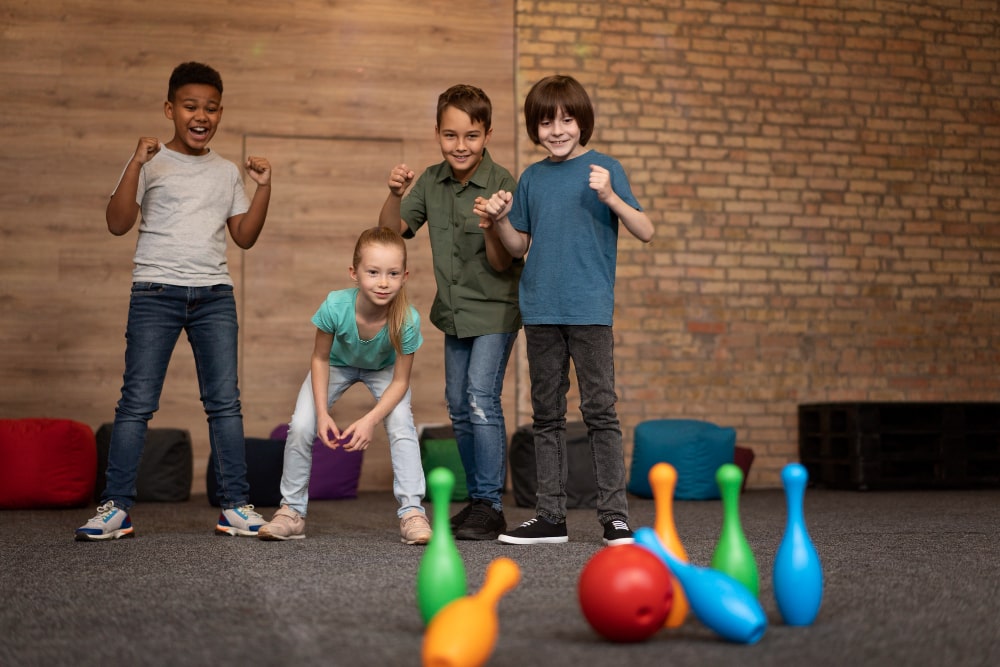
The game helps children move, develop their large and small muscles, and maintain regular blood circulation. It also contributes to the balanced secretion of endocrine glands. With its ability to regulate hormonal balance and support physical development, play also affects social and emotional development. In addition, children learn to control their movements through play. They develop the ability to direct their movements according to given instructions and their own desires through the experiences they gain in different games.
During play, children have to struggle with their whole body through movements such as jumping, climbing, pulling, pushing, wrestling, and carrying. Play is an ideal process for the development of motor skills such as strength, speed, attention, coordination, and flexibility. Children also gain flexibility and agility in their movements by providing coordination and balance between the parts of the body through play.
In general, physical development encompasses both large and small muscle skills. Ball games such as basketball, volleyball, and soccer promote the development of large muscles. Games such as marbles, card games, and cutting and pasting support the development of small muscles. These actions, which help burn or break down the energy accumulated in the body, contribute to the child's health through play.